Invisalign vs. Traditional Braces: A Complete Guide to Choosing Your Orthodontic Treatment

Invisalign vs. Braces

Publication date: September 24, 2025


One of the most crucial decisions you’ll have to make on your journey to a straighter smile is whether to use Invisalign or traditional braces. As a teenager preparing for prom photographs or an adult seeking orthodontic treatment for the first time, this choice influences your everyday life. Knowing the distinctions between these two common alternatives might help you choose one that fits your lifestyle, budget, and treatment objectives.

Both Invisalign and conventional metal braces work effectively to straighten teeth, but they do so in quite different ways, each with its own set of advantages and disadvantages. This detailed comparison will bring you through all you need to know about each treatment option, allowing you to choose which may be the best match for your specific case.

Understanding Traditional Metal Braces

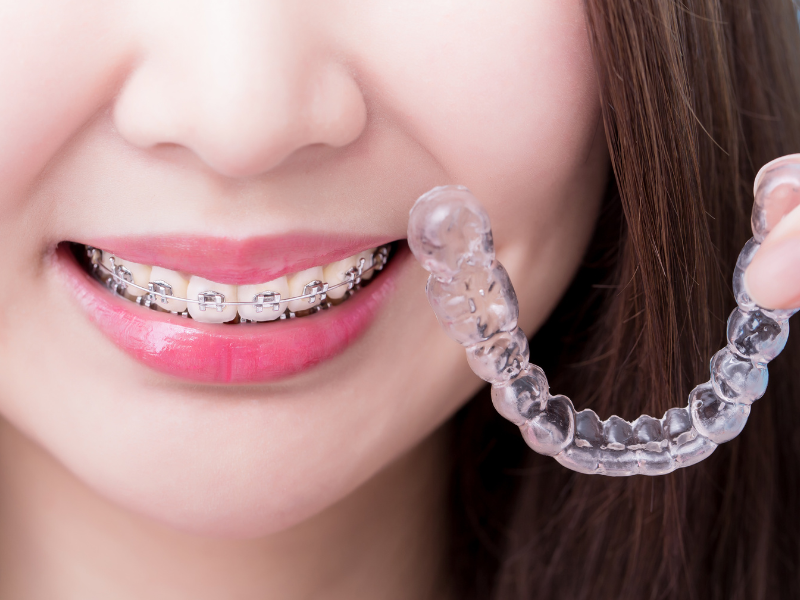
For a long time, conventional metal braces were the most effective technique to correct teeth, and for good reason. These tried-and-true gadgets feature metal brackets bonded to each tooth, with archwires connecting them. The archwires provide moderate, consistent pressure on the teeth, gradually moving them into the proper positions.

Traditional braces’ primary components work together to shift teeth effectively:

  • Metal brackets were bonded directly to the surface of each tooth.
  • Archwires that connect all the brackets and allow them to move
  • Elastic bands (ligatures) that keep wires in place and may add individuality via colors.
  • Extra components, such as rubber bands or springs, for certain motions

These components function as a unified system to handle complex orthodontic challenges.

Your orthodontist will tighten the wires and make any other changes that are needed to keep your teeth on schedule with regular braces. It happens every 4 to 6 weeks. Braces work well for even the most difficult orthodontic problems because they put steady, controlled pressure on the teeth.

Traditional braces work well for a lot of different dental problems, from minor crowding to major bite problems. They are helpful for complex situations that require a lot of tooth rotation, vertical movement, or bite correction. The length of time a person needs to wear braces varies from person to person, but most people wear them for 18 to 24 months.

Because they are permanently designed, traditional braces are very reliable and can work all the time without needing the patient to follow the rules. Once turned on, they work all the time to help you reach your treatment goals. They are an excellent choice for individuals who may struggle to follow the rules for portable equipment.

Understanding Invisalign Clear Aligners

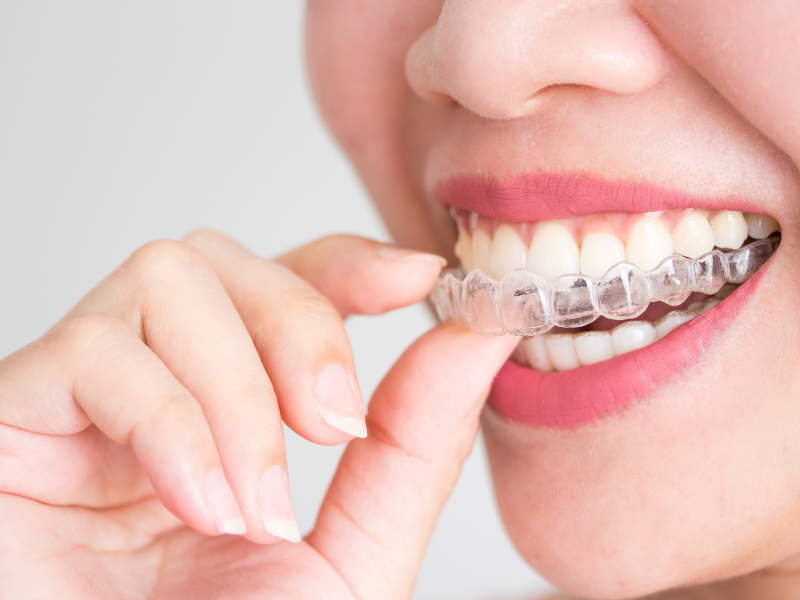
In the late 1990s, Invisalign revolutionized orthodontic treatment by introducing the concept of clear, removable aligners. These plastic trays are made just for you and are almost invisible when you wear them. They use cutting-edge 3D imaging technology to plan out your entire treatment from start to finish.

The Invisalign treatment process is different from others because it has a few key parts:

  • Custom 3D scanning to create precise digital representations of your teeth.
  • A sequence of progressive aligners that you wear for one or two weeks at a time.
  • Apply pressure to specific teeth at each step to shift them.
  • The removable design allows for regular eating and dental hygiene habits.
  • Most treatments require 20 to 40 aligner sets, making the timeframe straightforward to understand.

This meticulous technique enables the teeth to move in a controlled and gentle manner during the treatment process.

One of the best things about Invisalign is that you can see the results before you start treatment. Your orthodontist might use advanced computer modeling to show you what your teeth will look like at each stage and when the treatment is over. This technology enables more accurate treatment planning and yields results that are more likely to occur.

Invisalign is great for fixing mild to severe orthodontic problems like crowding, spacing, and bite problems. Invisalign technology has gotten better lately, which means it can handle more difficult situations. But for serious orthodontic issues, traditional braces are the best option.

Invisalign vs. Braces

Detailed Comparison Analysis

Here’s a complete comparison of the most essential features of these treatment options to help you understand the main differences between them:

Aspect Traditional Braces Invisalign
Visibility Noticeable metal brackets and wires Virtually invisible, clear plastic
Removability Fixed in place for the entire treatment Removable for eating and cleaning
Treatment Range Effective for all orthodontic issues Best for mild to moderate cases
Average Treatment Time 18-36 months 12-24 months
Office Visits Every 4-6 weeks for adjustments Every 6-8 weeks for monitoring
Eating Restrictions Avoid hard, sticky, chewy foods No food restrictions (remove before eating)
Oral Hygiene More challenging, it requires special tools Regular brushing and flossing routine
Comfort Initial discomfort, potential for cuts Mild pressure with each new aligner
Patient Compliance Not needed (fixed appliance) Must wear 20-22 hours per day
Sports/Activities May require a mouthguard Remove for contact sports

This comparison shows that each treatment option has its own benefits, depending on what you need and what you want.

Key Factors for Adults and Teens

When picking orthodontic treatment, you need to think about different things at different points in your life. Knowing these things can help you make a choice:

For Adults:

  • Concerns about how a professional looks often favor Invisalign.
  • Good habits for oral hygiene make it easier to maintain them.
  • It’s more important to be flexible in your lifestyle.
  • People may want different lengths of treatment depending on what happens in their lives.

For Teenagers:

  • It can be hard to follow the rules with removable aligners.
  • Social concerns about looks are essential.
  • Removable options may be suitable for individuals who lead active lifestyles.
  • Parents need to be involved in treatment decisions.

These age-specific factors underscore the absence of a universal solution to the braces versus Invisalign dilemma.

Effectiveness and Treatment Scope

In the proper situations, both methods work nicely. Traditional braces are better for severe orthodontic disorders because they may squeeze teeth from all sides and stay there. They perform best for biting correction, crowding, and up-and-down movement.

After years of improvement, Invisalign can now solve many issues that braces could. Still, it works best for mild to moderate space, crowding, and biting issues. Patients must follow Invisalign guidelines and wear aligners 20-22 hours a day.

Cost Considerations

Orthodontic treatment costs vary greatly depending on individual factors. The complexity of your case, treatment duration, location, and orthodontic demands determine the price.

Instead of offering you vague price estimates that may not fit your investment, we are honest. We’ll examine your situation during your appointment and provide a thorough, individualized cost estimate based on your treatment requirements. This strategy gives you the proper information to pick the finest orthodontic therapy.

Payment plans and financing are available at many orthodontic practices to make treatment more affordable. Contact us, and we’re pleased to work with your insurance carrier to maximize benefits and minimize out-of-pocket costs.

Conclusion

Invisalign and regular braces are both proven ways to get a straighter, healthier smile. The best option for you will depend on your unique situation, treatment needs, and personal tastes. No matter which option you choose, the most important thing is to work with an experienced orthodontist who can help you get the beautiful smile you’ve always wanted. Make an appointment for a consultation to learn about your options and start your journey to better oral health and confidence.

How Cosmetic Dentistry Can Change Your Life

Are you unsure if cosmetic dentistry is right for you? Not sure if it is worth it? Check out this FREE article that will help you understand!

How Cosmetic Dentistry Can Change Your Life